
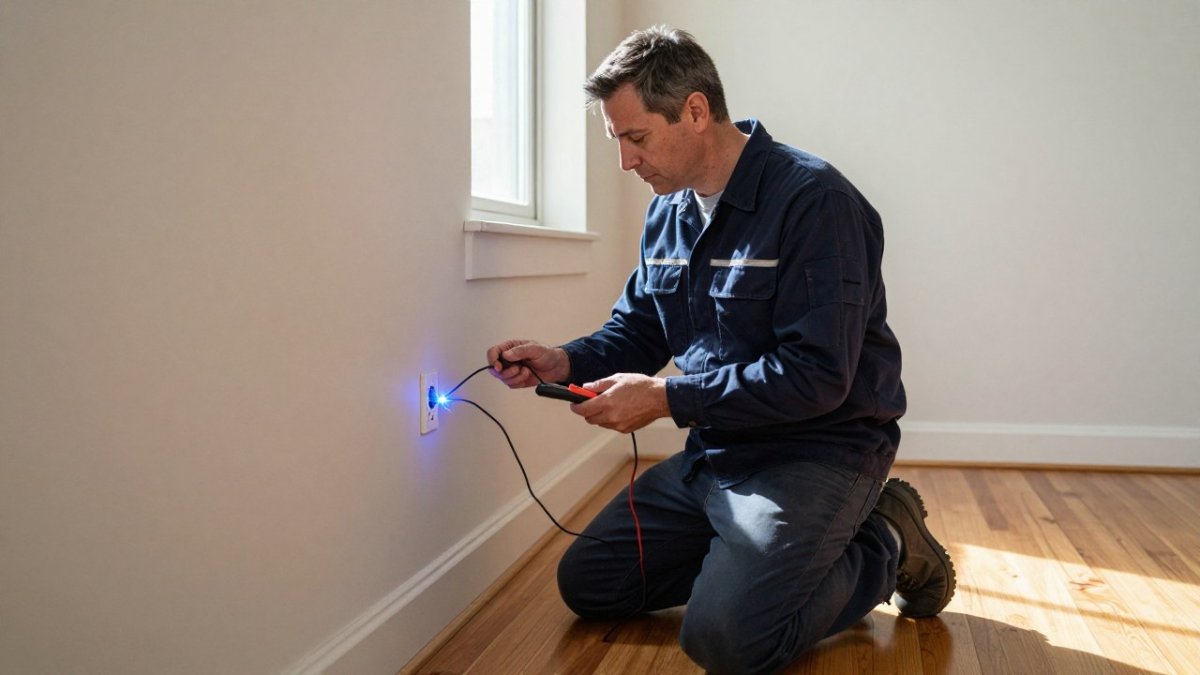
Last Updated: November 22, 2026
Quick Summary
A sparking outlet is a fire risk, so stop using it immediately: unplug every cord, shut off the circuit at the breaker, and keep the power off until a licensed electrician inspects it. Never pour water on an electrical outlet, and if flames appear, get everyone out and call 911.
- Sparks at a receptacle are not normal, even small ones, and sustained sparking points to a loose connection or failing wiring.
- Confirm the outlet is dead with a plug-in tester or a lamp, then tape the breaker off so no one restores power.
- If the panel is warm, buzzing, or shows scorch marks, do not touch it and call a licensed electrician.
- Replacing the receptacle without fixing the loose wire that caused the arcing means the new outlet will spark too.
- Call an electrician if sparking repeats, you smell burning, the outlet is warm, or the breaker trips after reset.
Table of Contents
- What to Do If an Outlet Is Sparking
- Why Is My Outlet Sparking? Common Causes
- How to Turn Off Power to an Outlet at the Breaker
- Troubleshooting Before You Replace Anything
- When to Call an Electrician for a Sparking Outlet
- DIY Risks vs. Hiring a Licensed Electrician
- How to Evaluate a Quote and Avoid Unnecessary Panel Work
- Request Your Appointment
- Frequently Asked Questions
What to Do If an Outlet Is Sparking
A sparking outlet is a fire risk, and the right first move is to stop using it immediately. Turn off the power at the breaker, unplug anything connected to it, and keep the circuit off until a licensed electrician inspects it. This guide walks through how to respond to a sparking outlet quickly, and when the safe answer is to call a professional rather than repair it yourself.
Sparks at a receptacle are not normal, even small ones. A brief flash when you plug in a device can happen, but sustained sparking, buzzing, or a burning smell points to a loose connection or failing wiring inside the box.
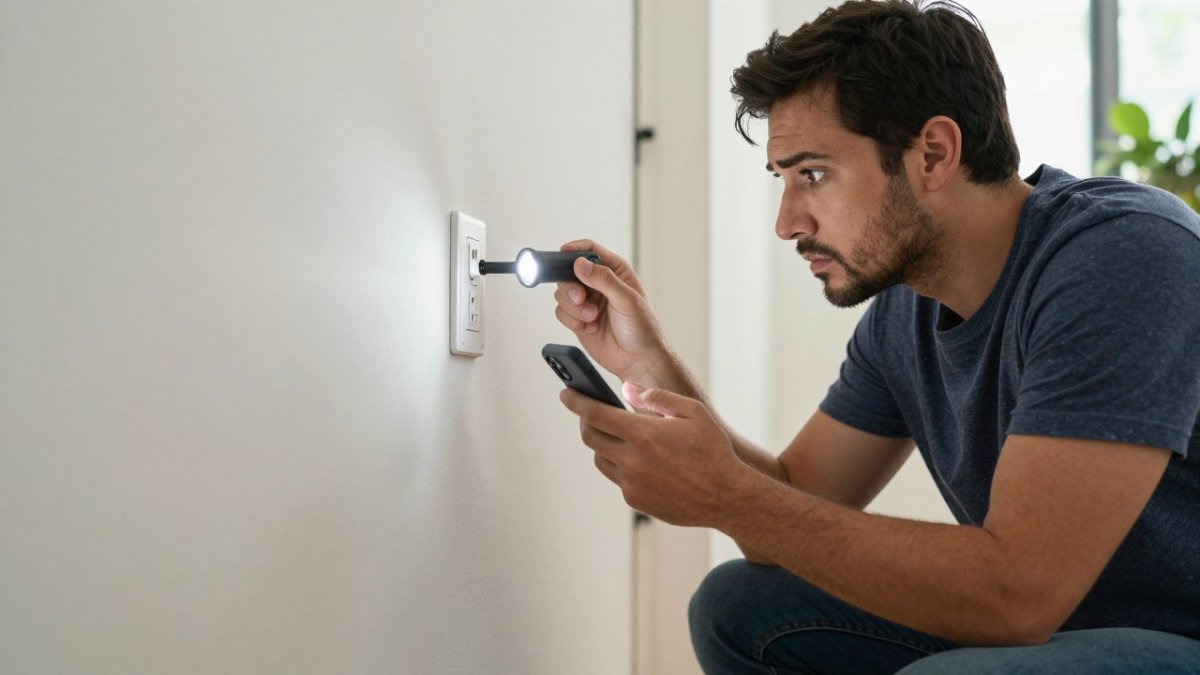
Here is the order to follow in the first sixty seconds:
- Stop using the outlet and unplug every cord from it.
- Do not touch the prongs or the plate with bare hands.
- Shut off the circuit at the breaker panel.
- Smell for burning plastic; if you find any, leave the area and call for help.
Watch out: never pour water on an electrical outlet or try to smother it with a cloth. If flames appear, get everyone out and call 911.
Why Is My Outlet Sparking? Common Causes
Sparks usually trace back to a loose wire, a worn receptacle, or a circuit carrying more load than it can handle. Each cause calls for a different fix, which is why guessing costs money.
The most common culprits are:
- Loose wire connections at the terminals or backstab ports, which arc as current jumps the gap.
- A worn-out receptacle where the internal contacts no longer grip the plug firmly.
- Overloaded circuits running too many appliances through one outlet or power strip.
- Water intrusion near kitchen, bath, or exterior outlets.
- Damaged wiring from age, rodents, or a previous poor repair.
A receptacle that sparks only when a specific appliance is plugged in may point to the appliance’s cord or plug rather than the outlet. Test that device on another circuit before assuming the wiring is at fault.
How to Turn Off Power to an Outlet at the Breaker
Killing power at the breaker is the single most important step before any inspection. Find the panel, identify the correct breaker, and switch it fully to the off position.
Follow this sequence:
- Locate the electrical panel, often in a basement, garage, closet, or utility room.
- Open the door and read the labels; if they are missing, have someone help map the circuits.
- Flip the breaker serving that room to OFF.
- Confirm the outlet is dead with a plug-in tester or a lamp.
- Tape the breaker off so no one restores power while you work.
If the panel is warm, buzzing, or shows scorch marks, do not touch it. Call a licensed electrician, because the problem may be at the panel itself rather than the outlet.
Troubleshooting Before You Replace Anything
Before buying a new breaker or receptacle, confirm what is actually failing. A few simple checks separate a worn outlet from a deeper wiring fault, and they keep you from paying for a part that was never the problem. Breaker problems often trace back to something other than the breaker itself.
Start with the obvious. Unplug everything and look at the outlet plate for cracks, discoloration, or melted plastic. Remove the plate only with the power off, then check for loose screws at the terminals and any blackened or scorched wire ends.
Then work through the three causes that mimic a failed breaker:
- An overloaded circuit. If the breaker trips when several loads run at once but holds when they are spread out, the circuit is carrying more than its rating, not failing. Move appliances to other circuits and see whether the trips stop. A breaker that trips under load is doing its job.
- A wiring fault. Loose neutral or ground connections, damaged cable, and backstab connections that have worked loose cause arcing and nuisance trips that a new breaker will not fix. Look for scorch marks, brittle insulation, and any aluminum wiring, which needs a professional evaluation rather than a homeowner repair.
- A failing appliance or cord. A device with a damaged cord or an internal short can trip a healthy breaker every time. Unplug it and confirm the circuit holds before replacing anything.
A common mistake is replacing the receptacle without addressing the loose wire that caused the arcing. The new outlet will spark too if the underlying connection stays bad. The same logic applies to breakers: swapping a breaker that keeps tripping without finding the overload or fault just resets the clock until the next trip.
Know where the homeowner’s role ends. You can safely unplug devices, reset a breaker once, test outlets with a plug-in tester, and observe which loads cause trips. Work inside an energized panel, removing the cover, touching terminals, or probing with a multimeter, should be left to a qualified electrician. If the wiring looks brittle, aluminum, or scorched, or if the breaker trips again immediately after a reset, stop and call a professional.
Watch out: resetting a breaker repeatedly to “see if it holds” can mask a real fault and stress the circuit; if it trips more than once, treat it as a symptom to diagnose, not a nuisance to clear.
When to Call an Electrician for a Sparking Outlet
Call an electrician any time sparking repeats, you smell burning, the outlet is warm, or the breaker trips after reset. These signs mean the problem is beyond a simple swap.
Reach for the phone if you notice:
- Persistent sparking or buzzing after the outlet is off.
- A burning smell or visible scorch marks.
- A breaker that will not reset or trips again immediately.
- An outlet that is hot to the touch.
- Any sparking near water, such as a kitchen or bathroom receptacle.
According to the U.S. Fire Administration electrical fire safety guidance, electrical failures remain a leading cause of home fires, which is why repeated sparking should never be ignored. A licensed electrician can trace the circuit and confirm whether the outlet, the wiring, or the panel needs attention.
DIY Risks vs. Hiring a Licensed Electrician
Replacing an outlet looks simple on video, but the risks are real. The decision comes down to your comfort with live wiring, code, and the tools involved.
| Factor | DIY Replacement | Licensed Electrician |
|---|---|---|
| Safety risk | High if power is not fully off | Managed with proper testing |
| Code compliance | Easy to miss permit rules | Handled to local code |
| Root-cause diagnosis | Often skipped | Traced to source |
| Time | Hours for a first-timer | Same-day service available |
| Warranty | None | Work backed by the contractor |
A common mistake is assuming a like-for-like swap needs no permit. Many jurisdictions require one for new circuits or panel changes, and an unpermitted repair can surface during a home sale. When in doubt, have a licensed electrician confirm what your local code requires.
How to Evaluate a Quote and Avoid Unnecessary Panel Work
A fair quote explains the diagnosis, the parts, and the labor before any work begins. Ask what the electrician found and why each line item is needed. The fastest way to spot an inflated estimate is to know what the job actually consists of, because the top-ranking pricing pages routinely blur two very different scopes: replacing one existing breaker and installing a brand-new circuit.
Scope 1: Replacing one existing breaker. Replacing a single breaker in an existing slot is generally a smaller job than the alternatives, though the right scope depends on what the diagnosis finds.
Scope 2: Installing a new circuit. A new circuit is a larger undertaking than a swap, and the scope of work depends on the building and the location involved.
A clear estimate separates its components. Pricing depends on the specific job, so request a written quote for current figures.
Use this checklist when reviewing an estimate:
- Does the quote state plainly whether the job is a breaker replacement or a new circuit?
- Are parts, labor, diagnostic time, and permit fees listed as separate lines?
- Is the diagnosis explained in plain language, including what was tested and what failed?
- Does it name the breaker type and amperage so you can confirm compatibility with your panel?
- Is the electrician licensed and insured, with the license number provided?
- If a full panel upgrade is proposed, does the quote explain the specific condition that requires it?
If a quote jumps straight to a full panel replacement without showing why, ask for the reasoning. Understanding when a panel upgrade is genuinely justified helps you separate necessary work from an upsell, and our guide on 9 panel upgrade facts that decide your resale value explains what actually drives that decision.
Watch out: a quote that is a single lump sum with no scope statement gives you no way to tell whether you are paying for a breaker swap or a new circuit, so ask for the breakdown in writing before you approve anything.
Request Your Appointment
A sparking outlet is not a wait-and-see problem. The safe path is to cut power, avoid using the outlet, and let a licensed professional trace the cause before it becomes a fire.
At High Quality Electric of NYC LLC, our licensed and insured team has served property owners since 2012. We diagnose the circuit, explain your options, and complete the repair to code. Get started with High Quality Electric of NYC LLC and put a stop to sparking outlets before they put your home at risk.
Frequently Asked Questions
Is it normal for an outlet to spark when you plug something in?
A tiny blue flash the instant a plug goes in can happen as the connection is made, especially with appliances that draw heavy current. What is not normal is a spark that repeats, a loud pop, a burning smell, scorch marks, or a spark when nothing is being plugged in. Those point to a loose wire, a worn receptacle, or a damaged breaker, and the outlet should be taken out of service until a licensed electrician inspects it.
Should I turn off the breaker if an outlet is sparking?
Yes. If the outlet is still sparking, smoking, or feels hot, switch off the breaker that controls it before touching anything else. If you are not sure which breaker it is, shut off the main breaker. Do not pull the plug on a smoking appliance and do not open the outlet plate while the circuit is live. Once power is off, keep the outlet unused and call a licensed electrician to find out why it sparked.
Can I fix a sparking outlet myself?
Replacing a receptacle is a job many homeowners can do, but a sparking outlet is a symptom, not the problem. The cause may be a loose backstab connection, a damaged wire, an overloaded circuit, or a failing breaker, and guessing wrong can leave the fault in place behind a new outlet. Unless you can confirm the wiring and the breaker are sound, have a licensed electrician diagnose it. That is also what keeps the work covered by insurance and meeting electrical code.
When is a sparking outlet an emergency?
Treat it as an emergency if you see flames, smoke, or scorch marks, smell burning plastic, hear crackling or buzzing, or the outlet stays hot after use. Shut off the breaker, keep everyone away from the outlet, and call for same-day help. A single small flash with no other signs can wait for a scheduled visit, but it should still be inspected rather than ignored, because a loose connection tends to get worse over time.
