
Quick Summary
The cost of replacing a residential circuit breaker depends on the breaker type, amperage, panel condition, and whether the electrician finds additional problems beyond the failed breaker. Labor usually makes up most of a standard swap, while AFCI and GFCI breakers add to the part price. Get an itemized written estimate before work begins.
- Labor is usually the largest part of a standard breaker replacement, while the breaker itself is a smaller line item.
- AFCI and GFCI breakers cost more in parts because of their built-in protection circuitry.
- A breaker that trips repeatedly usually signals a circuit problem, so replacing it without finding the cause can leave a fire hazard.
- Ask for an itemized estimate listing labor, breaker type and brand, and any permit or inspection costs.
- Work inside an energized panel should be done by a licensed electrician, not as a DIY repair.
Table of Contents
- What a Residential Circuit Breaker Replacement Usually Costs
- Labor and Materials: How the Price Breaks Down
- How Much Does a 20 Amp Circuit Breaker Cost?
- Replacing One Breaker Versus Installing a New Circuit
- When a Main Breaker Replacement Cost Applies and When It Becomes a Panel Job
- Can I Replace a Circuit Breaker Myself, and What Does Hiring Out Cost?
- Cost of Replacing an Electrical Panel and How to Evaluate a Quote
- Booking a Breaker Replacement With High Quality Electric of NYC LLC
- Frequently Asked Questions
What a Residential Circuit Breaker Replacement Usually Costs
Last Updated: November 21, 2026
The cost of replacing a residential circuit breaker depends on the breaker type, amperage, panel condition, and whether the electrician finds anything beyond the failed breaker. A straightforward swap costs far less than a panel upgrade, but a quote can climb quickly once the electrician inspects the panel.
A good estimate starts by asking what is tripping or failing, how old the panel is, and what the circuit powers. Those answers tell you whether a simple replacement will do or whether the job is really a larger project.
Typical costs for a standard residential breaker swap fall in a modest range, with labor making up most of the total. Specialty breakers such as AFCI and GFCI models cost more in parts. Replacing a main breaker or an entire panel is a different category of work. A clear scope on paper before work starts prevents surprises later.
Watch out: a breaker that trips repeatedly is usually signaling a problem with the circuit, not simply a weak breaker. Replacing it without finding the cause can leave a fire hazard in place.
Labor and Materials: How the Price Breaks Down
Every residential breaker quote has two parts: labor and materials. Labor covers the electrician’s time, travel, diagnosis, shutting off power, removing the old breaker, installing and wiring the new one, and testing the circuit. Materials cover the breaker and small components.
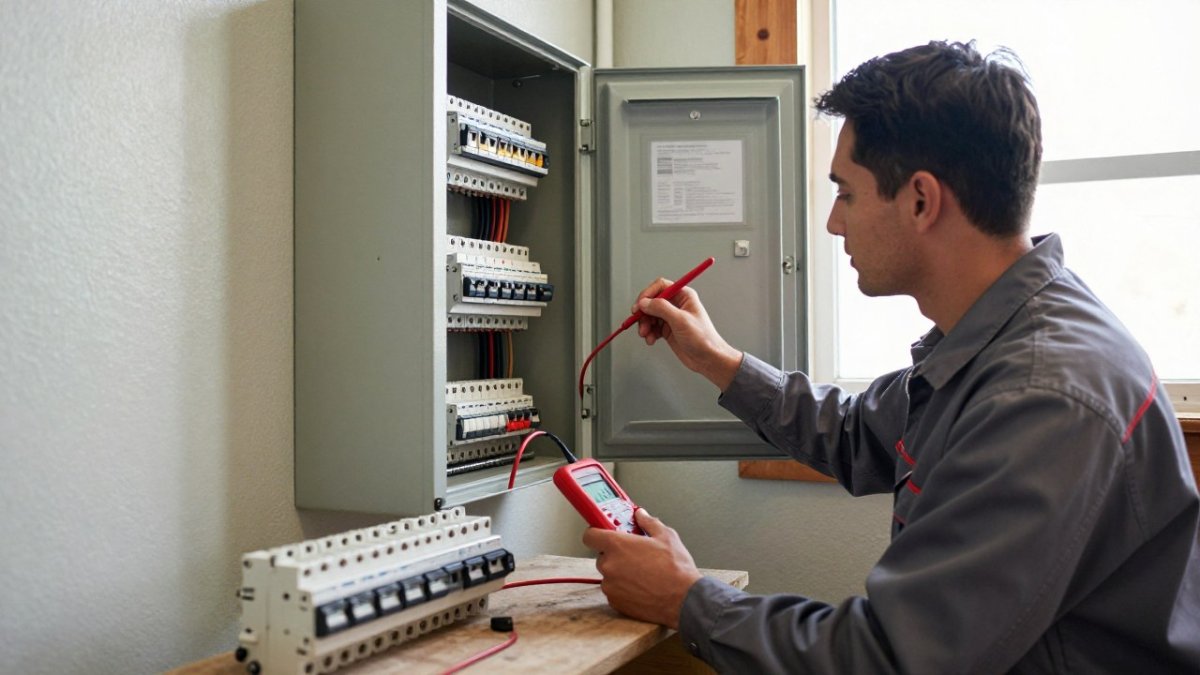
Labor is usually the largest part of a standard breaker replacement, while the breaker itself is a comparatively small line item. A standard 20 amp single-pole breaker is generally one of the less expensive parts in the panel.
A transparent quote separates the components so you can see what you are paying for. Here is how a realistic itemized estimate for a single standard breaker replacement can add up:
| Cost Component | What It Covers | Typical Range (USD) |
|---|---|---|
| Diagnostic or service-call fee | Travel, initial troubleshooting, confirming the fault | $75 to $150 |
| Labor | Shutoff, removal, installation, testing | $150 to $350 |
| Standard breaker | Replacement breaker of matching amperage and brand | $10 to $60 |
| AFCI or GFCI breaker | Arc-fault or ground-fault protection | $40 to $120 |
| Permit or inspection | Required in some jurisdictions | $50 to $200 |
Typical Range (USD)
A job’s cost depends on factors such as panel access, the breaker brand, the time needed for diagnosis, and whether a permit and inspection are required. Many contractors apply a service-call minimum, so a small job still carries a floor price.
Ask your electrician for an itemized estimate listing labor hours, breaker type and brand, and any additional parts. A line item for diagnosis or a service call is reasonable; a bundled total makes it hard to judge value or compare bids.
For current pricing, contact High Quality Electric of NYC LLC for a written estimate based on your home.
How Much Does a 20 Amp Circuit Breaker Cost?
A 20 amp breaker is the most common size for general-purpose household circuits, such as bedroom outlets, kitchen counter receptacles, and bathroom circuits. The breaker itself is widely available, and labor usually makes up most of the price.
Whether the 20 amp breaker is standard or a specialty type makes a real difference. A standard 20 amp breaker is the baseline. An AFCI or GFCI version costs more in parts and may require additional wiring checks because those breakers protect against different hazards. The amperage alone does not determine the price; the breaker’s protection type matters just as much.
Matching the amperage is essential. Installing a breaker with a higher rating than the wire can handle creates a fire risk. The correct size for the circuit should be confirmed before anything is installed.
Standard Versus AFCI and GFCI Breakers
Standard breakers protect against overloads and short circuits. AFCI (arc-fault circuit interrupter) breakers detect dangerous arcing in the wiring, which can start fires, and GFCI (ground-fault circuit interrupter) breakers protect against shock by shutting off power when current leaks to ground (Preventing Home Fires: Arc Fault Circuit Interrupters (AFCIs)). Building codes require these protections in specific areas of the home, so the right choice depends on where the circuit serves.
AFCI and GFCI breakers generally cost more than standard models. Installation may take longer because the electrician must verify the circuit’s wiring and test the new protection. An electrician can confirm which breaker type the circuit requires before you commit.
Replacing One Breaker Versus Installing a New Circuit
These two jobs are often confused, but they are different in scope and cost. Replacing one breaker means swapping a failed or worn breaker for a new one on an existing circuit. The wiring stays in place, and the electrician works within the current panel space.
Installing a new circuit is a larger project: running new wire from the panel to a new outlet, light, or appliance location, adding a breaker in an open slot, and often opening walls or ceilings.
If a homeowner calls asking for a breaker replacement but really needs a new circuit for an appliance such as an EV charger, the quote will be very different. A licensed electrician can tell you which job applies to your situation before pricing it.
When a Main Breaker Replacement Cost Applies and When It Becomes a Panel Job
The main breaker controls power to the entire home. Replacing it is more involved than replacing a branch breaker because the main is connected to the utility feed and must be handled with particular care. The cost depends on whether the panel itself can accept a new main.
A main breaker replacement can become a panel replacement if the panel is old, damaged, or no longer compatible with current breaker models. Older panels from some manufacturers have known issues with breaker fit and reliability. When an electrician finds corrosion, scorching, or obsolete components, the recommendation may shift to a full panel upgrade.
A common mistake is accepting a main breaker replacement without asking whether the panel’s condition was evaluated. Ask your electrician to inspect the panel for signs of wear and to explain clearly why a panel replacement is or is not needed.
Can I Replace a Circuit Breaker Myself, and What Does Hiring Out Cost?
Some homeowners consider replacing a breaker themselves to save money, and it is worth being clear about where the safe line sits.
Turning off the main breaker does not necessarily de-energize every part of the panel. The service conductors feeding the main lugs remain live, and in many panels the utility feed stays energized no matter what the breaker handles say.
What a homeowner can safely do is limited to observation and resetting. You can reset a tripped breaker once, note which circuit it serves, and check whether the trip lines up with a specific appliance or heavy load.
Local rules often require a licensed electrician for panel work, and many areas require a permit and inspection for a breaker replacement, especially when a new circuit or specialty breaker is involved.
When you hire out the job, the cost is primarily the service call, labor, and the breaker itself. Expect a diagnostic or service-call fee, labor for the swap, and the breaker part on top.
Watch out: if a breaker trips again immediately after being reset, stop resetting it and call an electrician.
Cost of Replacing an Electrical Panel and How to Evaluate a Quote
A panel replacement is the largest electrical job most homeowners face. It involves replacing the entire distribution panel, often with a higher amperage service, and typically requires a permit, utility coordination, and inspection. The cost reflects materials, labor to rewire the panel, and the inspection process.
When you evaluate a panel quote, look for these points:
- Scope: Does the quote state the panel size, amperage, and whether it includes the main?
- Itemization: Are labor, materials, permits, and inspection listed separately?
- Necessity: Did the electrician explain why the panel must be replaced, with specific findings?
- Licensing and insurance: Is the contractor licensed, and do they carry liability coverage?
- Warranty: What does the workmanship warranty cover, and for how long?
Be cautious of a quote that recommends a panel replacement without showing evidence. Ask the electrician to point out the specific problem, such as corrosion, overheating, or an incompatible breaker. A second opinion is reasonable when the recommendation is expensive.
Watch out: an unnecessary panel replacement is one of the most expensive mistakes a homeowner can make. Request a clear diagnosis before agreeing to the work.
Booking a Breaker Replacement With High Quality Electric of NYC LLC
If your breaker keeps tripping, feels warm, or the panel shows signs of wear, our licensed and insured team can diagnose the problem and give you a clear, itemized estimate. We serve Queens and the surrounding New York City boroughs, with same-day and weekend appointments for urgent issues.
Frequently Asked Questions
How much does it cost to replace a circuit breaker?
The cost depends on the breaker type, amperage, and labor. A standard breaker swap is usually modest, while AFCI and GFCI breakers cost more. Request an itemized estimate for your specific situation.
Is it safe to replace a breaker myself?
Working inside an energized panel is dangerous. Most jurisdictions require a licensed electrician for panel work, so hiring a professional is the safer and more reliable choice.
When does a breaker replacement turn into a panel replacement?
If the panel is damaged, corroded, or incompatible with current breakers, a panel replacement may be necessary. Ask your electrician to explain the specific findings before agreeing to the work.
What should a breaker replacement quote include?
A clear quote lists labor, breaker type, any permit or inspection costs, and a workmanship warranty. Be wary of quotes that bundle everything into one number.
Frequently Asked Questions
How much would an electrician charge to replace a circuit breaker?
For a standard single-pole breaker in an accessible panel, most electricians charge a service call or minimum fee plus the cost of the breaker and their labor time. Pricing varies by market, the panel’s condition, and whether the job needs a permit. Ask for an itemized quote that separates parts from labor. High Quality Electric of NYC LLC provides current pricing on request, so contact the team for a quote based on your panel and the work needed.
Can I replace a circuit breaker myself?
Replacing a breaker involves working inside a live panel, where contact with the main lugs or bus bars can cause a fatal shock or arc flash even with the breaker itself switched off. Many homeowners are not permitted to do this work, and Local rules often require licensed electricians and permits for panel work. Do not attempt it yourself. If a breaker keeps tripping, an electrician can diagnose the cause before replacing anything.
Should an older electrical panel be replaced?
A panel that is 30 to 50 years old, shows signs of overheating or scorched buses, uses discontinued breaker brands, or trips repeatedly may need replacement rather than another breaker swap. An electrician can check compatibility, load capacity, and condition. Replacement costs far more than a single breaker, so get a written assessment that explains why the panel needs to be replaced before agreeing to the work. A licensed electrician can inspect the panel and explain your options.
How long does it take an electrician to replace a breaker panel?
A straightforward residential panel replacement can take a day or more, depending on the panel size, the service upgrade, utility coordination, and inspection scheduling. Work that involves the meter or service entrance can take longer. Ask your electrician for an estimated timeline when you request a quote, and confirm whether the price includes permits and the final inspection.
